
Diabetes can damage the blood vessels inside your eyes long before you notice any change in your vision. At Round Rock Eyes, we provide comprehensive diabetic eye exams for patients with Type 1, Type 2, and pre-diabetes, including OCT imaging and visual field screening. Proudly serving Round Rock, Cedar Park, Georgetown, Pflugerville, and the greater Austin area.
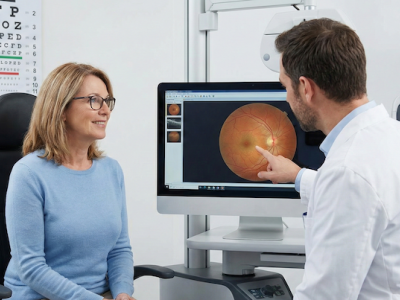
High blood sugar damages blood vessels throughout the body, and the tiny blood vessels inside the eye are especially vulnerable. The problem is that this damage can progress silently for years. Many patients with early diabetic eye disease have no symptoms at all and still have clear vision. By the time vision changes become noticeable, significant and potentially irreversible damage may have already occurred.
This is why an annual dilated eye exam is recommended for all diabetic patients, regardless of how well-controlled blood sugar is or how good vision currently feels. Early detection is the most effective tool available for protecting your sight. Catching changes early means more treatment options and better long-term outcomes.
At Round Rock Eyes, we see diabetic patients as part of a broader care team. Our exam findings are documented and communicated back to your endocrinologist or primary care physician so everyone managing your diabetes has a complete picture of your eye health.
During your diabetic eye exam, our doctors look for early signs of conditions that are directly caused by diabetes and can threaten your vision if left undetected.

Diabetic retinopathy is the most common diabetic eye disease and a leading cause of blindness in adults. It occurs when high blood sugar damages the blood vessels in the retina, causing them to leak, swell, or grow abnormally. In the early stages there are often no symptoms. As the condition progresses, patients may notice floaters, blurred vision, dark spots, or sudden vision loss.
There are two stages of diabetic retinopathy. Non-proliferative diabetic retinopathy (NPDR) is the earlier stage, in which the blood vessels weaken and leak fluid into the retina.
Proliferative diabetic retinopathy (PDR) is the more advanced stage, in which abnormal new blood vessels grow on the retina and can cause serious complications including retinal detachment.

The macula is the central part of the retina responsible for sharp, detailed vision. When damaged blood vessels leak fluid into the macula, it swells and distorts central vision.
Diabetic macular edema is a leading cause of vision loss in diabetic patients and can develop at any stage of diabetic retinopathy.
Like retinopathy, it can be present without noticeable symptoms in its early stages.
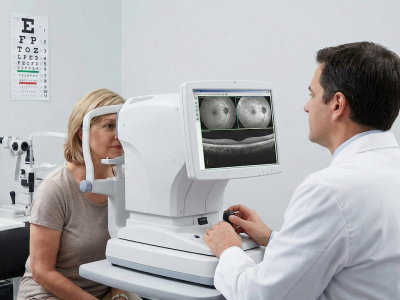
Our diabetic eye exam goes beyond a standard vision check. It is a medical examination specifically designed to detect and document changes related to diabetes throughout the eye.
Your exam at Round Rock Eyes includes:
We recommend scheduling your diabetic eye exam annually, or more frequently if your doctor advises it based on the severity of your condition.

Annual diabetic eye exams are recommended for anyone living with diabetes or at high risk of developing it. You should schedule a diabetic eye exam if you:
If you have had diabetes for several years, or if your blood sugar has been difficult to control, your risk of developing diabetic eye disease is higher and consistent annual exams are especially important.
For patients newly diagnosed with diabetes, we recommend scheduling an exam as soon as possible rather than waiting for symptoms to appear. Your managing physician can advise on the right frequency for your specific situation based on how long you have had diabetes, how well controlled your blood sugar has been, and any other risk factors involved.
How often should diabetic patients get an eye exam?
At minimum, once a year. The American Diabetes Association and the American Academy of Ophthalmology both recommend annual dilated eye exams for all patients with diabetes, even if vision seems normal. If diabetic retinopathy has already been detected, your doctor may recommend exams every three to six months depending on severity.
Should I see an optometrist or an ophthalmologist for a diabetic eye exam?
Both are qualified to perform diabetic eye exams. Optometrists provide comprehensive diabetic eye evaluations, including dilation, retinal imaging, and OCT, and are often the first to detect diabetic eye disease. If significant retinopathy is found that requires surgical treatment, your optometrist will refer you to a retinal ophthalmologist. At Round Rock Eyes, our doctors perform the full diabetic evaluation and coordinate with your broader care team.
What should I expect during a diabetic eye exam?
Diabetic eye exams often take longer than a standard comprehensive eye exam. This is mainly because they require specific testing to thoroughly check for diabetes-related changes in the eyes. Pupil dilation is frequently needed to allow a clear view of the retina, optic nerve, and blood vessels. Additional procedures, such as visual field testing, may also be performed. As a result, your appointment may take up to one hour or more to complete all the required steps.
Please note that after dilation, your vision may be blurry and your eyes sensitive to light for several hours, so we recommend bringing sunglasses and arranging a ride home if possible..
Does a diabetic eye exam hurt?
No. The exam is non-invasive. The dilating drops may cause brief stinging when applied, and bright lights used during the exam can be temporarily uncomfortable, but there is no pain involved.
How much does a diabetic eye exam cost?
Diabetic eye exams are typically billed as a medical visit rather than a routine vision exam, which means they are generally covered under medical insurance rather than a vision plan. Most patients with diabetes coverage through Medicare or private medical insurance will have their diabetic eye exam covered in full or with a standard copay. We recommend verifying your coverage before your appointment, and our team is happy to help you work through any questions.
My blood sugar is well controlled. Do I still need an annual diabetic exam?
Yes. Good blood sugar control significantly reduces your risk, but it does not eliminate it. Diabetic eye disease can develop even in patients with well-managed diabetes, and the exam is the only way to confirm that no changes are occurring. Think of it the same way you think of your annual A1C test, it is a routine check that protects you whether or not anything is wrong.
Do you coordinate with my other doctors?
Yes. After your exam, we document our findings and provide a report to your endocrinologist or primary care physician, whichever doctor referred you or manages your diabetes. Keeping your entire care team informed is an important part of managing diabetes comprehensively, and we take that responsibility seriously.
Do you see diabetic patients from outside Round Rock?
