
Age-related macular degeneration (AMD) is one of the leading causes of vision loss in adults over 50, and early detection is the most important factor in preserving your sight. At Round Rock Eyes, we provide comprehensive AMD monitoring using advanced imaging technology, nutritional supplementation, and at-home tracking tools. Our goal is to catch changes early and slow progression before it affects your daily life. Serving patients throughout Round Rock, Cedar Park, Georgetown, Pflugerville, and the greater Austin area.

Macular degeneration is a condition in which the macula, the central part of the retina responsible for sharp, detailed vision, gradually deteriorates. The macula is what allows you to read, recognize faces, and see fine detail. As it breaks down, central vision becomes blurry or distorted, while peripheral vision typically remains intact.
Age-Related Macular Degeneration (AMD) is the most common form and primarily affects people over the age of 50. It is one of the leading causes of vision loss in the United States. While there is no cure, the progression of AMD can be slowed with proper monitoring, lifestyle changes, and targeted nutritional support.
AMD occurs in two forms, dry and wet, which behave differently and require different management approaches.
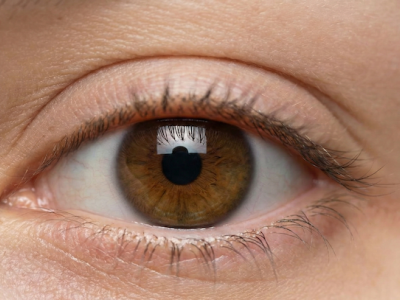
Dry AMD is the more common form, accounting for the majority of AMD cases. It occurs when the light-sensitive cells in the macula slowly break down over time.
An early sign of dry AMD is the presence of drusen, small yellow deposits that accumulate under the retina. As dry AMD progresses, central vision gradually dims or blurs. In its earlier stages, many patients have no noticeable symptoms.
Vision loss from dry AMD tends to be slower and more gradual.
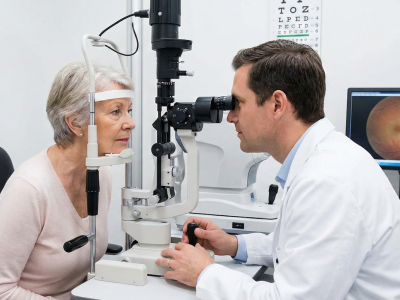
Wet AMD is less common but more serious. It occurs when abnormal blood vessels grow beneath the macula and leak fluid or blood, causing rapid damage to the macula. Wet AMD can cause sudden changes in vision, including distortion of straight lines, dark spots in central vision, or rapid vision loss.
Wet AMD requires prompt medical treatment, typically through injections administered by a retinal ophthalmologist. At Round Rock Eyes, we monitor for early signs of wet AMD and coordinate referrals to retinal care when needed.
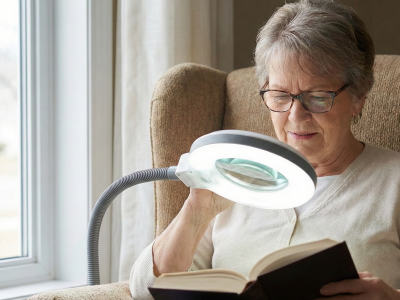
AMD often develops without noticeable symptoms in its early stages, which is why regular monitoring is so important for anyone at risk.
Common symptoms as AMD progresses include:
Blurred or dim central vision
Difficulty reading or recognizing faces
Straight lines appearing wavy or distorted
Dark or blank spots in the center of vision
Colors appearing less vivid
Needing more light than usual for reading or detailed tasks

You may be at higher risk for AMD if you:
Are 50 years of age or older
Have a family history of macular degeneration
Are a current or former smoker
Have high blood pressure or cardiovascular disease
Have prolonged exposure to ultraviolet light
If you are experiencing any of these symptoms or have multiple risk factors, schedule an evaluation as soon as possible. Early detection significantly improves the ability to slow progression.
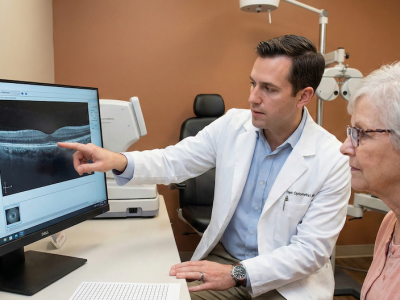
Because AMD can progress without symptoms, consistent monitoring is the cornerstone of management. At Round Rock Eyes, we schedule bi-annual visits for AMD patients to track any changes over time and respond early if progression is detected.
Monitoring visits at Round Rock Eyes include:
Monitoring at this frequency allows us to identify changes early, adjust your management plan as needed, and refer you promptly to a retinal ophthalmologist if signs of wet AMD develop.
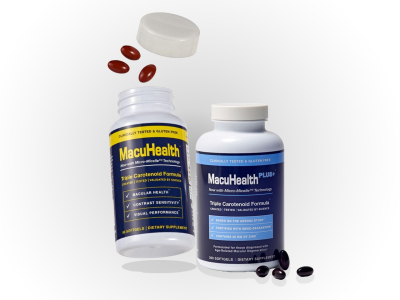
Nutritional supplementation plays an important role in slowing the progression of dry AMD. At Round Rock Eyes, we recommend MacuHealth, a scientifically formulated supplement that contains all three macular pigments found naturally in the eye: Lutein, Zeaxanthin, and Meso-Zeaxanthin.
Most standard eye supplements, including the widely used AREDS2 formula, contain only Lutein and Zeaxanthin. MacuHealth includes the third pigment, Meso-Zeaxanthin, which is concentrated at the center of the macula and is not found in most diets. Clinical research has shown that all three pigments together are more effective at building macular pigment optical density (MPOD), which helps protect the macula from damage caused by oxidative stress and blue light.
We carry MacuHealth in our office and recommend it as part of a comprehensive AMD management plan for appropriate patients. Our doctors will advise whether MacuHealth is right for your specific situation during your evaluation.

Between office visits, the Amsler grid is a simple and effective tool for monitoring your central vision at home. The grid consists of a pattern of straight lines with a dot at the center. When viewed with each eye separately, any wavy, missing, or distorted lines can indicate a change in macular function that warrants prompt attention.
We recommend that AMD patients check their vision on the Amsler grid regularly, at least several times per week. If you notice new distortion or a change from your last check, contact our office right away. Do not wait for your next scheduled visit.
The Amsler grid is not a substitute for professional monitoring. It is designed to help you stay aware of changes between appointments so that we can act quickly if something shifts.
What is the difference between dry and wet macular degeneration?
Dry AMD is the more common form and progresses slowly as the cells of the macula gradually break down. Wet AMD is less common but more aggressive, caused by abnormal blood vessels leaking fluid under the macula. Dry AMD can sometimes convert to wet AMD, which is one reason consistent monitoring is so important even when symptoms seem stable.
Can macular degeneration be cured?
There is currently no cure for macular degeneration. However, progression can be significantly slowed with proper monitoring, nutritional supplementation, and lifestyle changes. For wet AMD, injectable treatments administered by a retinal ophthalmologist can reduce vision loss and in some cases improve vision. Early detection is the most important factor in achieving the best outcomes.
Can dry AMD turn into wet AMD?
Yes. Dry AMD can convert to wet AMD at any stage. This is why regular monitoring visits and consistent at-home Amsler grid checks are so important. If wet AMD develops, early treatment gives the best chance of preserving vision.
How often should I come in if I have been diagnosed with AMD?
We recommend bi-annual visits for AMD patients. At these visits we image the retina and perform OCT testing to monitor for new drusen formation. If we detect signs of progression between visits, we will adjust the schedule accordingly. Your at-home Amsler grid monitoring is an important part of staying vigilant between appointments.
Is MacuHealth the same as AREDS2 vitamins?
No. The AREDS2 studies included two carotenoids: lutein and zeaxanthin. MacuHealth contains those two plus meso-zeaxanthin, the third macular pigment concentrated at the center of the macula. MacuHealth is available as a carotenoid-only formula with lutein, zeaxanthin, and meso-zeaxanthin, or in an AREDS2-based formula that adds the three carotenoids to the additional AREDS2 vitamins. Clinical research supports the benefit of all three pigments together for building and maintaining macular pigment, which helps protect against AMD progression. Our doctors can advise whether MacuHealth is appropriate for your situation.
What lifestyle changes help slow macular degeneration?
Quitting smoking is the single most impactful lifestyle change for AMD patients, as smoking significantly increases the risk of progression. Other helpful measures include eating a diet rich in leafy greens and colorful vegetables, wearing sunglasses that block UV and blue light, controlling blood pressure and cholesterol, and maintaining a healthy weight. These changes complement but do not replace regular monitoring and supplementation.
Do you see AMD patients from outside Round Rock?
Yes. We regularly see patients from Cedar Park, Georgetown, Pflugerville, Hutto, and the greater Austin area. If you have been searching for macular degeneration care near you, Round Rock Eyes is located at 481 Sundance Pkwy in the La Frontera Shopping Center, Round Rock, TX 78681. Call us at 512-255-9995 or schedule an evaluation online.
