
At Round Rock Eyes, we don't just keep prescribing stronger glasses. We treat the condition. With over 25 years of experience serving Round Rock families, our doctors offer clinically proven treatments to slow the progression of nearsightedness and protect your child's long-term retinal health.
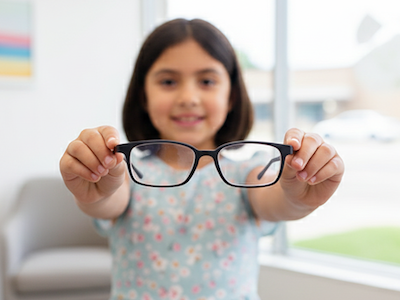
Myopia (commonly called nearsightedness) is a condition where the eyeball grows too long, causing distant objects to appear blurry. Myopia management (also called myopia control) is a clinical approach dedicated to slowing or stopping that progression in children and adolescents.
It is more than updating a glasses prescription. It is about actively protecting the eye's physical structure so your child avoids serious, vision-threatening complications later in life, including retinal detachment, glaucoma, and myopic maculopathy. Early intervention is key to achieving the best long-term outcomes.
At Round Rock Eyes, we provide comprehensive myopia management for patients throughout Round Rock, Cedar Park, Georgetown, Pflugerville, and the greater North Austin area.

The increase in your child's prescription is caused by the eyeball growing too long. While glasses correct vision, they do not stop this physical growth. Myopic progression is linked to serious eye health issues including retinal detachment, glaucoma, and macular degeneration. By controlling the lengthening of the eye, we not only improve current vision but dramatically lower your child's lifetime risk of blindness and severe eye disease.
Your child may be a good candidate for myopia control if they:
We focus on comprehensive, proactive nearsightedness treatment right here in Round Rock.
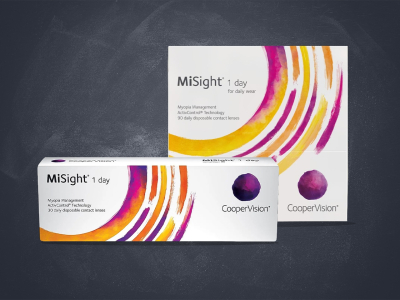
MiSight® 1-Day is a soft, daily-wear disposable contact lens specifically FDA-approved for children aged 8-12 at the initiation of treatment to slow the progression of myopia. These lenses feature an innovative optical design that not only corrects nearsighted vision but also sends a signal to the eye to slow its lengthening, making them a safe and effective treatment option for active children.
Why parents choose MiSight:
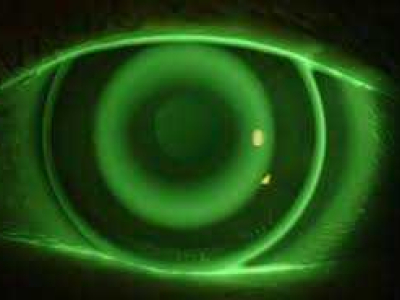
Orthokeratology (Ortho-K), often called Corneal Reshaping, involves wearing custom-designed, gas-permeable lenses overnight. While your child sleeps, these retainer lenses gently and temporarily reshape the cornea. They are removed in the morning, allowing your child to see clearly throughout the day without needing glasses or contact lenses. This treatment is highly effective at controlling myopic progression and is a great solution for children, teens, and adults who prefer a glasses-free lifestyle.
What are the benefits of Orthokeratology?
Several published clinical studies have found that orthokeratology lens designs inhibit the lengthening of the eye, which slows the progression of nearsightedness. For more information: Smart Study Link
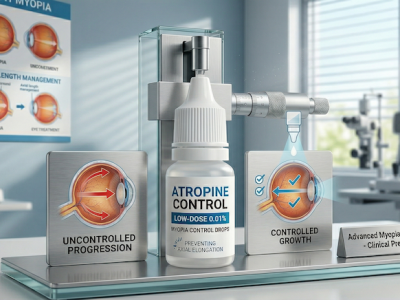
Atropine drops are a pharmacological treatment for myopia control. Used in very low concentrations, these daily eye drops have been clinically shown to slow down the rate of nearsightedness progression. This is an excellent option for children who may not be ready for contact lenses or as a complementary therapy alongside other treatments. Our doctors manage the customized dosage to ensure maximum efficacy with minimal side effects.
Key Benefits:

Stellest® lenses by EssilorLuxottica are specially designed spectacle lenses that do more than correct blurry vision. They actively work to slow how the eye grows. Each lens uses H.A.L.T. (Highly Aspherical Lenslet Target) technology, featuring hundreds of tiny lenslets that guide light in a way that signals the eye to slow its elongation, the main driver of myopia progression.
Stellest® lenses have been evaluated in clinical studies and received FDA market authorization in 2025. They are an ideal option for children who want a simple, non-invasive treatment that fits naturally into daily life without the need for contact lenses.
Why families choose Stellest® lenses:

It is a comprehensive evaluation, not a standard eye exam. Our doctors will review your child's prescription history to assess how quickly their myopia has been progressing, measure the physical length of the eye, and discuss your child's daily habits and lifestyle. From there, we'll walk through the treatment options that make the most sense for your child and answer any questions you have before making a recommendation. Most families leave the first visit with a clear plan in hand.
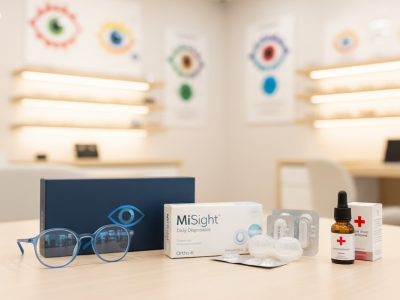
Every child's eyes are different, and there is no single best answer. The right treatment depends on your child's age, prescription, lifestyle, and personal preference. Here is a quick overview to help you get started:
Stellest® lenses are the easiest entry point. They look and feel like regular glasses, making them ideal for younger children or those who aren't ready for contacts. No fitting or insertion required.
MiSight® 1-Day lenses are soft daily disposable contacts that correct vision and slow progression simultaneously. They're a great fit for active kids aged 8 and up who are comfortable with contact lenses.
Ortho-K (Orthokeratology) is the most customizable option. These gas-permeable lenses are worn overnight and removed in the morning, giving your child clear vision all day with no glasses or contacts. Ideal for older children and teens who want a glasses-free lifestyle.
Low-dose atropine drops are a simple nightly eye drop that slows eye growth. They work well as a standalone treatment for younger children or as a complement to any of the other options for enhanced results.
During your myopia management consultation, our doctors will walk through all of these options with you and make a personalized recommendation. Many children benefit from a combination approach.
What is the difference between myopia management and myopia control?
The terms are used interchangeably. Both refer to clinical strategies designed to slow the progression of nearsightedness in children, rather than simply correcting it with glasses. At Round Rock Eyes, we use both terms to describe our program.
How much does myopia management cost?
Cost varies depending on which treatment is recommended for your child. Stellest® lenses are often the most affordable starting point since they are priced like specialty eyewear. MiSight® contacts and Ortho-K have lens fitting fees and ongoing supply costs. Low-dose atropine drops are generally the least expensive option overall. We go over all costs during your consultation so there are no surprises.
Is myopia management covered by insurance?
Some plans cover portions of the treatment. Vision plans often cover Stellest® lenses as corrective eyewear. Contact lens fitting fees for MiSight® or Ortho-K may be partially covered. Atropine drops may be covered under a medical plan. We recommend calling your insurer ahead of your visit, and our team is happy to help you work through coverage questions.
How long does a myopia management program last?
Most children stay in a program through their teenage years, until myopia naturally stabilizes, typically in the late teens or early twenties. Your child's doctor will monitor progression at every visit and adjust the plan as needed. The goal is to keep the prescription as stable as possible during the years when the eye is growing most rapidly.
QWhat age should myopia management start?
The sooner, the better. Earlier intervention means more years of slowed progression, which translates to a lower final prescription and a significantly reduced risk of serious eye disease in adulthood. Our doctors can help you determine whether your child is ready to begin.
Do you see patients from outside Round Rock?
Yes. We regularly see patients from Cedar Park, Georgetown, Pflugerville, Hutto, and the greater North Austin area. If you've been searching for a myopia management doctor near you, Round Rock Eyes is conveniently located in the La Frontera Shopping center at 481 Sundance Pkwy, Round Rock, TX 78681.
